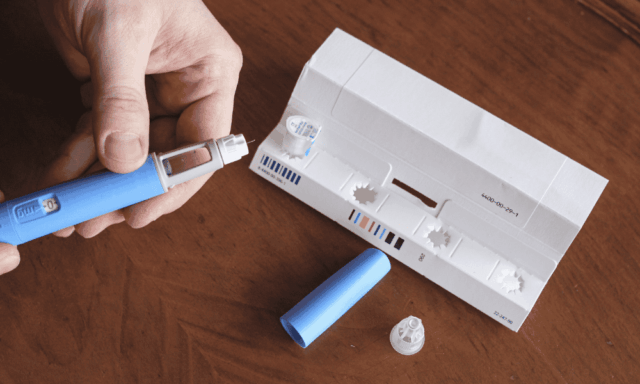
Since their introduction as a treatment for type 2 diabetes, GLP-1 receptor agonists (GLP‑1RAs) have significantly reshaped chronic disease care. As their use expands to include obesity and cardiovascular risk reduction, ODs are beginning to see a more complete picture of how these therapies may also affect the eyes.
If you’ve been following closely, there’s been quite a bit of debate and investigation around just how significant and prevalent the ocular risks of GLP-1RAs truly are.
The American Optometric Association’s June 2025 clinical report feels like a welcome consensus. It offers timely, evidence-based guidance to help you manage these evolving risks in clinical practice. Optometry 411 brings you a quick overview of the findings. Let’s dive in.
At a glance: AOA-flagged ocular risks
NAION (Non-Arteritic Anterior Ischemic Optic Neuropathy)
- Identified as a very rare but serious risk associated with semaglutide, the most prescribed GLP-1RA (Ozempic, Wegovy, Rybelsus)
- Up to 2× increased risk with semaglutide use
- After conducting risk assessment, the European Medicines Agency (EMA) calls for updated product info to list NAION as a very rare side effect
- Signs: Sudden, painless unilateral vision loss, visual field defect, dyschromatopsia, and optic disc swelling
- Discontinue GLP‑1RA and refer immediately if NAION is suspected
Diabetic retinopathy (DR) progression
- In the SUSTAIN-6 trial, semaglutide users showed a higher rate of DR complications (3.0%) than placebo (1.8%)
- This may result from rapid HbA1c reduction, a known contributor to early DR worsening
- Especially concerning in patients with preexisting DR
- Perform a baseline dilated eye exam and follow up within 12–18 months of treatment initiation
Neovascular AMD
- A population-based study found GLP-1RA users had a 2× higher relative risk of developing wet AMD (0.2% vs 0.1%)
- Though absolute risk remains low, the potential impact is vision-threatening
- Closely monitor individuals with AMD risk factors or history
Other rare events
Isolated reports of:
- Uveitis
- Diplopia
- Optic neuropathies beyond NAION
These are not yet confirmed by large-scale trials but suggest the need for comprehensive baseline evaluations. Maintain a high index of suspicion and educate patients to report new symptoms.
AOA Clinical Guidance for ODs
| When | What to Do |
|---|---|
| Before or within 1 month of GLP-1RA start | Perform a comprehensive, dilated eye exam |
| For high-risk patients | Add OCT and fundus photography for documentation |
| During first 12–18 months | Monitor based on individual risk (as often as every 6 months) |
| If visual symptoms emerge | Urgent evaluation and referral; consult with prescribing provider |
| Always | Provide education and coordinate interdisciplinary care |
With GLP-1RA use increasing (15 million users as of 2024) and ophthalmology workforce shortages projected by 2035, ODs are primed to lead ocular monitoring in this area.
As Invision reports: “There is a low risk of [serious ocular side effects],” says co-author Andrew Morgenstern, OD, director of the AOA’s clinical resources group. “But a low risk of a big number is a big risk. If it happens to you, it’s a problem.”
Read the full AOA report here: Glucagon-like Peptide-1 Receptor Agonists (GLP-1RAs) and Ocular Health: Guidance for Optometric Practice
This content is intended for educational purposes only and does not substitute for clinical judgment. Treatment decisions should be based on individual patient needs, professional guidelines, and a comprehensive clinical evaluation.