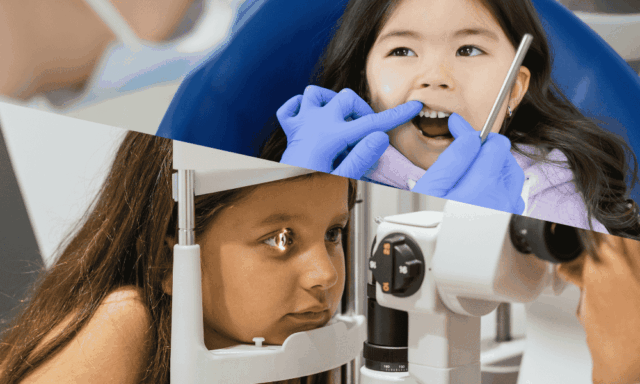
A 2025 study in the American Journal of Ophthalmology found that only one-third of children in the U.S. receive care from an eye doctor. While access barriers like cost and insurance play a role here, the findings bring to mind another significant issue:
Dental visits are widely understood as essential. Most children see a dentist regularly, often starting as early as age one. In contrast, pediatric eye exams are often overlooked or mistaken for a quick screening at school or the pediatrician’s office. The profession has yet to consistently convey that comprehensive eye exams are a vital part of preventive health, just like dental checkups.
Changing that perception is possible, even at the practice level. Let’s take a closer look.
Acknowledging the barriers
As mentioned above, there are real, documented barriers that limit access to care.
The AJO study looked into over 2,000 U.S. children with known vision disorders and found that cost, difficulty securing appointments, and eligibility concerns were the top three reasons for not receiving needed care. These obstacles were more common in low-income and Black or Hispanic households. Even when vision problems were documented, many children still lacked follow-up exams or treatment.
Access issues like these, combined with low public awareness, create a perfect storm.
Dentistry has a public messaging advantage
Dentistry has spent decades embedding itself into public consciousness. Parents are flooded with reminders about dental checkups from pediatricians, schools, insurance providers, even toothbrush packaging. Dental care has been framed, consistently and effectively, as a non-negotiable part of a child’s preventive health plan.
Pediatric eye care remains under-promoted, under-discussed, and widely misunderstood. Vision issues often go unnoticed or are mistaken for learning or behavioral problems. And too many parents believe a basic screening at the pediatrician is enough.
While vision and dental insurance are both often separate from medical insurance, dental care has built a stronger culture of routine use. Many families understand and expect regular dental visits. The same can’t be said for eye care.
What you can do right now
Optometry may not control insurance design, but there are quite a few things you can do at your practice:
- Clearly differentiate comprehensive eye exams from basic screenings. Don’t assume families know their child needs a comprehensive exam at 6 months and again at age 3.
- Frame exams as essential — not optional! — for school readiness, sports, and developmental health. Use email, social media, and in-office messaging to show how early eye exams can detect issues that impact these areas.
- Provide resources and guidance for families navigating cost or insurance questions.
- Use the same tactics that dentistry uses. Promote a clear exam timeline. Send reminders. Partner with schools and pediatric offices … or how about with dentists? Offer take-home materials and always use accessible language.
- Real-world example: This year, a local dentist sponsored the car pick-up lane signs at an elementary school. Signs are hung from a car’s rearview mirror, and the back side (facing the driver) shows the practice name and a QR code for the appointment page. This car sign is required when picking up your child, which means every single day of the school year, parents/caregivers are looking at the name of the dental practice.
Dentistry didn’t become essential in the minds of parents by accident. It happened through years of persistent, coordinated public education. There’s no reason optometry can’t do the same.